

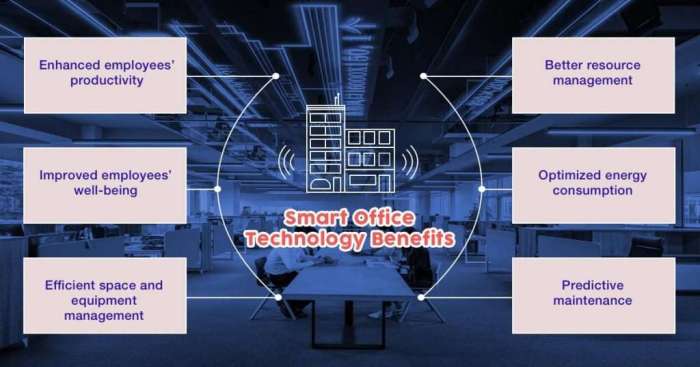
Exploring the impact of smart technology on workplace efficiency, this introduction sets the stage for a deep dive into the innovative solutions shaping modern work environments. From automation to data analysis, get ready to uncover the secrets behind maximizing productivity and collaboration in the digital age.
Introduction to Smart Technology
Smart technology in the workplace refers to the integration of advanced digital tools and devices that are designed to streamline processes, automate tasks, and improve overall efficiency. By leveraging the power of data analytics, artificial intelligence, and the Internet of Things (IoT), smart technology can revolutionize how businesses operate and employees work together.Smart technology plays a crucial role in enhancing workplace efficiency by optimizing workflows, providing real-time insights, and enabling seamless communication and collaboration among team members.
With the ability to automate repetitive tasks, analyze large datasets, and facilitate remote work, smart technology empowers employees to focus on high-value activities and make informed decisions faster.
Examples of Smart Technology in Modern Workplaces
- Smart Sensors: These devices can monitor environmental conditions such as temperature, humidity, and air quality in office spaces, helping to create a comfortable and productive work environment.
- Virtual Assistants: Virtual assistants like Alexa or Siri can schedule meetings, set reminders, and answer questions, saving time and increasing productivity for employees.
- Collaboration Tools: Platforms like Slack, Microsoft Teams, and Zoom enable seamless communication, file sharing, and project collaboration among remote and in-office team members.
- Smart Lighting Systems: These systems can adjust lighting levels based on natural light and occupancy, reducing energy costs and creating a more sustainable workplace.
Automation and Streamlining Processes
Automation plays a crucial role in boosting workplace efficiency by taking over repetitive tasks and streamlining processes. This not only saves time but also minimizes errors, allowing employees to focus on more critical aspects of their work.
Automating Routine Tasks
- Automated data entry systems can reduce manual errors and ensure accuracy in record-keeping.
- Chatbots can handle customer inquiries, freeing up customer service representatives to address more complex issues.
- Automated scheduling tools help in organizing meetings and appointments efficiently without the need for constant back-and-forth communication.
Improving Productivity and Reducing Errors
- Automated workflows ensure tasks are completed in a timely manner, avoiding delays and bottlenecks.
- Smart technology can flag potential errors before they occur, allowing for quick corrections and preventing costly mistakes.
- Robotic process automation (RPA) can handle repetitive tasks such as data extraction and processing, saving employees valuable time.
Streamlining Communication and Collaboration
- Collaboration tools like project management software enable team members to work together seamlessly, regardless of their physical location.
- Instant messaging platforms facilitate quick communication and decision-making, reducing the need for lengthy email exchanges.
- Cloud-based file sharing ensures that team members have access to the latest documents and information, promoting collaboration and transparency.
Data Analysis and Decision-Making
Data analysis plays a crucial role in informed decision-making within the workplace. Smart technology enables the collection, processing, and interpretation of data to provide valuable insights that can drive operational efficiency and productivity.
Benefits of Data-Driven Insights
- Identifying trends and patterns: By analyzing data, organizations can uncover trends and patterns that may not be apparent through manual methods. This information can be used to make strategic decisions and optimize workflows.
- Improving decision-making: Data-driven insights provide a solid foundation for decision-making, reducing the reliance on gut feelings or assumptions. This leads to more accurate and effective choices that can positively impact the organization.
- Enhancing performance monitoring: Smart technology allows real-time monitoring of key performance indicators, enabling quick adjustments and interventions to improve overall performance.
Tools for Data Analysis
- Business Intelligence (BI) software: BI tools like Tableau, Power BI, and Qlik provide powerful analytics capabilities, allowing organizations to visualize data and gain valuable insights for decision-making.
- Machine learning algorithms: Advanced analytics tools powered by machine learning algorithms can analyze complex data sets to generate predictions and recommendations, helping organizations optimize processes and workflows.
- Customer Relationship Management (CRM) systems: CRM platforms such as Salesforce and HubSpot collect and analyze customer data to improve marketing strategies, sales processes, and customer service, ultimately enhancing workplace efficiency.
Remote Work and Flexibility
Smart technology plays a crucial role in enabling remote work and providing flexibility to employees, especially in today's fast-paced work environment.
Virtual Collaboration Tools Improve Team Efficiency
Virtual collaboration tools such as video conferencing platforms, project management software, and messaging apps streamline communication and enhance team productivity.
- Video conferencing tools like Zoom or Microsoft Teams allow team members to connect and collaborate in real-time, regardless of their physical location.
- Project management software such as Trello or Asana helps teams organize tasks, track progress, and meet deadlines efficiently.
- Messaging apps like Slack or Microsoft Teams facilitate quick communication, file sharing, and decision-making among team members.
Impact of Smart Technology on Work-Life Balance and Employee Satisfaction
Smart technology not only enables remote work but also contributes to a better work-life balance and increased employee satisfaction.
- Flexible work arrangements made possible by smart technology allow employees to work from anywhere, reducing commute time and providing more time for personal activities.
- Access to work-related data and tools remotely ensures that employees can stay productive even outside of traditional office hours.
- Improved communication and collaboration through virtual tools foster a sense of connectedness and teamwork among remote team members, enhancing job satisfaction.
Security and Privacy Considerations
When it comes to implementing smart technology in the workplace, ensuring security and privacy should be top priorities. Cybersecurity measures are essential to protect sensitive data and prevent unauthorized access.
Importance of Cybersecurity Measures
Implementing strong cybersecurity measures is crucial to safeguarding valuable company information and preventing data breaches. This includes using encryption, multi-factor authentication, and regular security updates to keep systems secure.
Best Practices for Data Privacy and Protection
- Regularly update software and devices to patch security vulnerabilities.
- Train employees on cybersecurity best practices to prevent phishing attacks and social engineering.
- Implement access controls to limit who can view and modify sensitive data.
Examples of Security Features in Smart Technology Solutions
-
End-to-end encryption
ensures that data is securely transmitted and can only be accessed by authorized parties.
-
Biometric authentication
adds an extra layer of security by requiring unique physical characteristics for access.
-
Secure remote access
allows employees to work from anywhere while ensuring data remains protected.
End of Discussion
In conclusion, the integration of smart technology not only revolutionizes how work gets done but also sets the foundation for a more agile and efficient workforce. By embracing these tools and practices, businesses can stay ahead of the curve and unlock new levels of success in the ever-evolving landscape of work.
FAQ Guide
How can smart technology enhance communication among team members?
Smart technology enables instant messaging, video conferencing, and project management tools that streamline communication and collaboration within teams.
What are some examples of tools that use data analysis to improve workplace efficiency?
Tools like Tableau, Power BI, and Google Analytics provide insights into employee performance, workflow bottlenecks, and resource allocation for enhanced efficiency.
Why is cybersecurity crucial when implementing smart technology in the workplace?
Cybersecurity is essential to protect sensitive data, prevent breaches, and maintain the integrity of smart technology systems that store valuable information.

